15 Minute Yoga Routine For Men
A good 15-minute yoga routine for men focuses on the areas most men neglect: tight hips, stiff shoulders, and a weak lower back. You do not need to be flexible to start. You need a mat, a little floor space, and the willingness to move slowly for fifteen minutes. This guide gives you a complete routine you can do at home, explains why each pose matters for a man's body, and shows you how to make it a habit without overcomplicating it.
Why Men Need a Different Approach to Yoga?
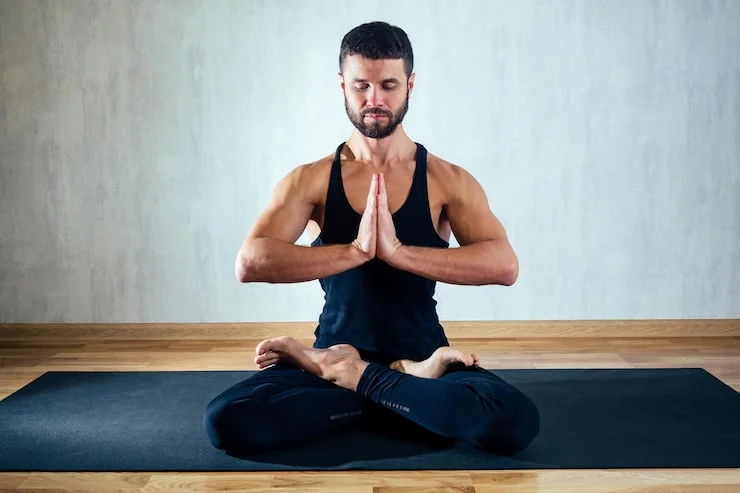
Most men sit for a living. You sit in the car, you sit at a desk, you sit on the couch. Over months and years, this shapes your body in predictable ways. Your hip flexors shorten. Your hamstrings tighten. Your shoulders round forward. Your lower back takes the strain.
A general yoga class might address these issues, but it often moves too fast or assumes a level of flexibility you do not have. A routine built for men starts with the reality of a stiff, strong body and works from there. It uses poses that open the hips and chest while building stability in the core and spine. It does not ask you to fold yourself into a pretzel. It asks you to breathe, move with control, and pay attention to what your body is telling you 15 minute yoga routine for men.
Research on yoga for men consistently points to the same benefits: reduced lower back pain, improved hamstring flexibility, better shoulder mobility, and lower stress levels. None of these require an hour of practice. Fifteen focused minutes, done consistently, can deliver real changes in how you feel during the day and how you perform in other activities you enjoy.
Read Also: Yoga Stretches For Men
What You Need Before You Start?
You do not need expensive equipment. A mat helps because it gives your hands and feet grip, but a carpeted floor works fine. If you have tight hamstrings or lower back issues, a yoga strap or a long towel can bridge the gap between your hands and your feet. A couple of firm pillows or a stack of books can serve as blocks if you need support under your hands or hips.
Wear clothes you can move in. Shorts and a t-shirt are fine. You do not need special shoes because you will be barefoot. Bare feet give you better balance and let your toes grip the floor.
Find a quiet spot where you will not be interrupted for fifteen minutes. Put your phone on silent. If you have not exercised in a while, check with a doctor before starting any new routine, especially if you have a history of back problems, joint issues, or high blood pressure.
The 15-Minute Routine
This sequence moves from standing poses to floor poses, then finishes with a short recovery. Move slowly. If a pose asks you to hold for five breaths, count five slow inhales and exhales. Do not rush to the next shape. The transitions are part of the practice.
Minute 1–2: Mountain Pose and Breath Check
Stand at the top of your mat with your feet hip-width apart. Let your arms hang by your sides. Close your eyes for a moment and notice how you are standing. Are you leaning forward onto your toes? Are you sinking into your heels? Shift your weight so it is balanced across the whole foot.
Take five slow breaths through your nose. On each exhale, let your ribs soften and your shoulders drop away from your ears. This is not a passive slump. Keep your belly slightly engaged so your lower back does not sag. Think of your spine as a stack of blocks: each one rests evenly on the one below it. This pose looks simple, but it sets the tone for everything that follows. If you rush through it, you will rush through the rest.
Minute 3–4: Standing Side Bend and Chest Opener
Stay standing. Interlace your fingers and reach your arms overhead. If your shoulders are tight, keep your hands shoulder-width apart instead of interlacing. Lean to your right, pressing your left hip out slightly. You should feel a stretch along the left side of your torso. Hold for three breaths. Come back to center, then lean left.
Now bring your hands behind your back, interlacing your fingers if possible. Straighten your arms and lift your chest toward the ceiling. Squeeze your shoulder blades together. This opens the front of your body, which sitting all day has compressed. Hold for three breaths. Release your hands and shake out your arms.
Minute 5–6: Low Lunge with a Twist
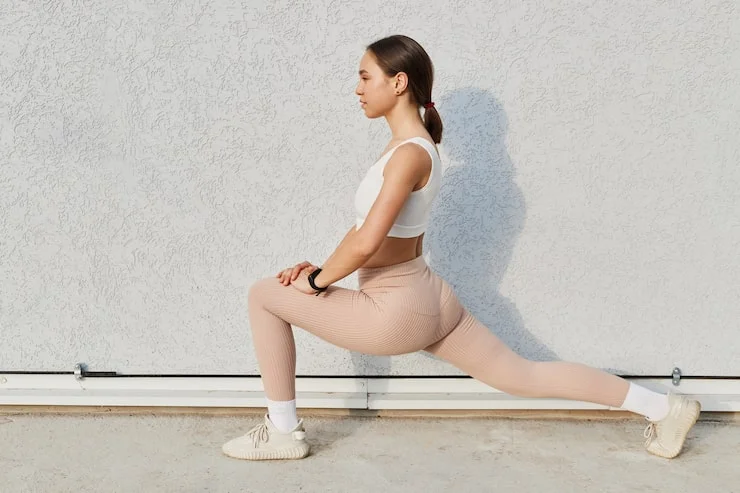
Step your right foot forward into a lunge. Lower your left knee to the floor. If your knee feels sensitive, put a folded towel or pillow under it. Keep your right knee stacked over your right ankle. Lift your torso upright and place your hands on your hips.
Now bring your arms into a goalpost shape: elbows out to the sides, hands pointing up. Keep your hips facing forward as you rotate your ribcage toward your right leg. Do not force the twist. Move only as far as your breath allows. Hold for three breaths, then return to center. Switch sides.
This pose targets the hip flexors of the back leg and the chest and mid-back of the twisting side. For men who drive or sit at a desk, this combination addresses two of the tightest areas at once.
Minute 7–8: Squat Hold and Half Lift
Stand with your feet slightly wider than hip-width, toes turned out a little. Bend your knees and lower your hips into a squat. Go as deep as you can while keeping your heels on the floor. If your heels lift, widen your stance or place a folded towel under them. Let your elbows rest inside your knees and press your palms together. This opens your hips and groin. Hold for four slow breaths.
Then place your hands on your shins or on a block. Straighten your legs as much as you can while keeping your back flat. Your torso should come parallel to the floor. This is a half lift, and it stretches your hamstrings without rounding your lower back. Hold for two breaths, then bend your knees and return to the squat. Repeat the half lift once more.
Minute 9–10: Plank to Cobra
Come to a plank position with your hands under your shoulders and your body in a straight line from head to heels. Do not let your hips sag or pike up. Pull your belly button toward your spine and squeeze your glutes. Hold for three breaths. If a full plank is too much, drop your knees to the floor.
Lower your knees and bring your chest down toward the mat. Keep your elbows close to your ribs. Press the tops of your feet into the floor and lift your chest into a small cobra. Do not crank your neck back. Keep your gaze forward and your shoulders sliding down away from your ears. Hold for two breaths, then lower. Repeat the plank and cobra once more.
This pair builds strength in the front of your body and counteracts the rounded posture that comes from too much sitting. It also strengthens the muscles along your spine that support your 15 minute yoga routine for men.
Minute 11–12: Standing Balance
Stand up and shift your weight onto your left foot. Lift your right knee to hip height. If you feel unsteady, keep your right toes on the floor for balance. Find a spot on the wall in front of you and stare at it. This gives your brain a fixed reference point and makes balancing easier. Hold for five breaths. Switch sides.
Balance work is often skipped in short routines, but it matters. Strong balance protects you from falls and improves body awareness. It also forces your stabilizing muscles to engage in a way that sitting never does. You will feel your standing ankle and hip working to keep you upright. That is the point.
Minute 13–15: Child's Pose and Recovery
Kneel on your mat with your big toes touching and your knees wide. Sit your hips back toward your heels and walk your hands forward. Let your forehead rest on the mat or on a pillow. Breathe into your back. Feel your ribs expand against the floor. Stay here for the final three minutes.
This pose does more than stretch your lower back. It calms your nervous system. After twelve minutes of active movement, your heart rate is up and your muscles are working. Child's pose brings you back down. Do not skip it. The recovery is part of the training. When you finish, roll up slowly. Sit for a moment before you stand.
You May Also Like: How Yoga Improves Testosterone In Men
How to Make This Routine a Habit?
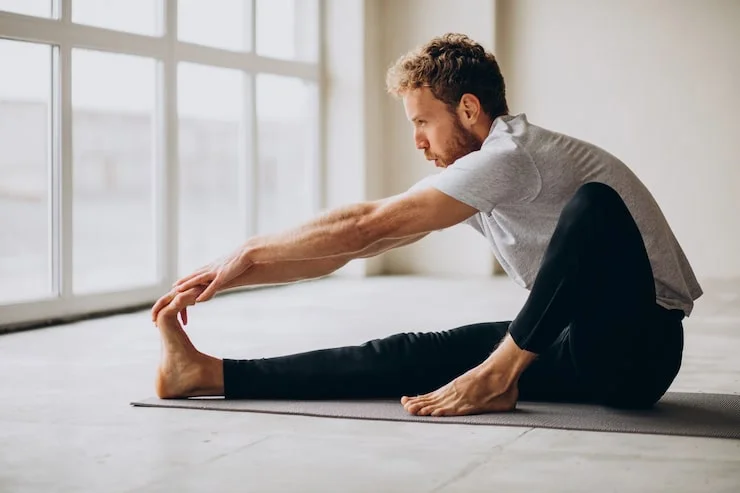
The hardest part of yoga is not the poses. It is showing up. Fifteen minutes sounds short until you have to find those minutes in a busy day. Here are a few approaches that work.
Attach it to something you already do. Do the routine right after you wake up, before you check your phone. Or do it right after work, before you sit down for the evening. When you link a new habit to an existing one, you do not have to rely on motivation. The existing habit becomes the trigger.
Do it imperfectly. Some days you will only have ten minutes. Do ten minutes. Some days you will feel stiff and clumsy. Do it anyway. The goal is not a perfect practice. The goal is showing up often enough that your body starts to change. A short, consistent practice beats a long, occasional one every time.
Track it simply. Put a mark on a calendar each day you do the routine. Do not worry about streaks or missing a day. Just look at the marks accumulating over a month. Seeing progress on paper makes you more likely to continue.
Expect soreness, not pain. After the first few sessions, you may feel mild soreness in your hips, hamstrings, or shoulders. This is normal. It means you used muscles that have been inactive. Sharp pain is different. If a pose causes sharp pain, stop. Modify the pose or skip it. Yoga should not hurt.
Frequently Asked Questions
Can I do this routine every day?
Yes. Fifteen minutes of moderate movement is safe for most people to do daily. If you feel very sore, take a lighter day and focus on the breathing and recovery poses. Listen to your body.
What if I cannot touch my toes?
You do not need to. None of the poses in this routine require you to touch your toes. The half lift and forward fold in the squat section give you room to bend your knees. Over time, your hamstrings will lengthen, but the routine works from day one regardless of your flexibility.
Is yoga enough exercise on its own?
For general health, most guidelines recommend a mix of aerobic activity and strength training. This routine is a complement to other exercise, not a replacement. It improves mobility, reduces stiffness, and helps recovery. Think of it as maintenance for your body, the same way you change the oil in your car.
Will this help with lower back pain?
Many men find that gentle yoga reduces lower back discomfort, especially when the pain is related to sitting and tight hip flexors. This routine includes poses that stretch the hips and strengthen the core and spine. If your back pain is severe, persistent, or comes with numbness or weakness, see a doctor before starting.
Do I need to be flexible to start?
No. Flexibility is a result of practice, not a requirement for it. The poses in this routine have modifications for tight bodies. Use them. You will get more out of a modified pose that you can breathe in than a deeper pose you are forcing your way into.
Conclusion
Fifteen minutes is not a lot of time. But done consistently, it is enough to change how your body feels. The routine above is simple on purpose. It does not ask you to learn Sanskrit names or memorize a complex sequence. It asks you to stand, breathe, move, and pay attention.
Start today. Roll out a towel if you do not have a mat. Do the first three poses. See how you feel. Tomorrow, do a little more. The men who benefit most from yoga are not the ones who are naturally flexible. They are the ones who keep showing up, stiff hips and all.