Easy Yoga Stretches For Men
Most men wake up stiff. Maybe you sat at a desk for nine hours, or you slept in a weird position, or you lifted weights yesterday and your hamstrings feel like guitar strings. You do not need to be flexible like a gymnast to feel better. You need a handful of stretches that work on the spots that get tight on a male body and a clear plan for doing them without wasting time.
This guide gives you seven easy yoga stretches for men. Each one has a plain explanation of how to do it, why it matters for your body, and what to watch out for. You can do the whole sequence in about fifteen minutes. You do not need a mat, though one helps. You do not need to be able to touch your toes. You just need a little floor space and the willingness to breathe while you hold a position that feels slightly uncomfortable but not sharp.
Why Men Get Tight in the First Place?
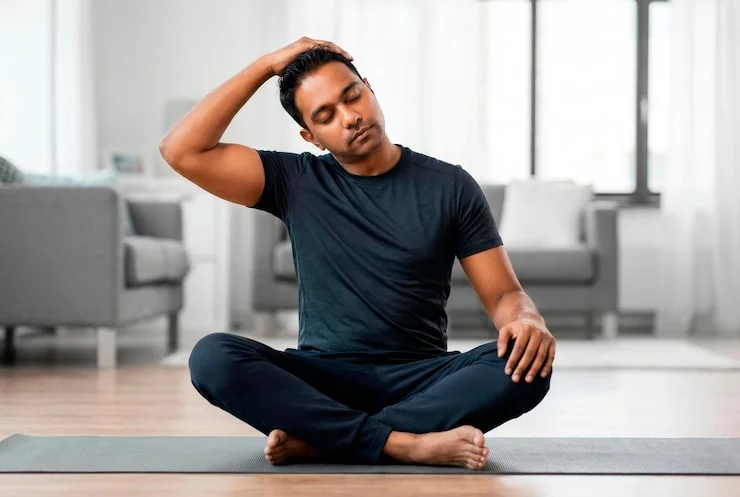
Men tend to carry tension in predictable places. The hips get tight from sitting. The hamstrings shorten from cycling, running, or hours in a chair. The shoulders round forward from staring at screens. The lower back takes the brunt of all of it.
Yoga stretches work on these areas by asking you to hold a position while you breathe. That holding is the difference between a quick toe touch and a real stretch. When you stay in a pose for thirty to sixty seconds, your nervous system gets a signal that it is safe to let the muscle lengthen. Rushing through stretches does almost nothing. Holding them with steady breath does the work .
Before You Start: Three Rules That Matter
Do not bounce. Bouncing triggers a reflex that makes muscles tighten, not relax. Hold still and let the breath do the work.
Breathe through your nose. Slow nasal breathing keeps your heart rate steady and tells your body this is not a threat. If you catch yourself holding your breath, you are pushing too hard.
Stop at tension, not pain. A stretch should feel like a firm pull. If it feels sharp or electric, back off. You are not trying to win anything.
Read Also: Yoga Routine For Men With Stiff Body
The Seven Stretches
1. Cat-Cow: Warm Up the Spine
Start on your hands and knees. Your wrists go under your shoulders, knees under your hips. Inhale as you drop your belly toward the floor and lift your chest and tailbone. Exhale as you round your back toward the ceiling and tuck your chin. Move slowly between the two shapes for eight to ten breaths.
This is less of a stretch and more of a wake-up call for your spine. Most men skip spinal movement entirely during the day. Cat-cow puts motion back into the segments between your vertebrae and warms up the muscles along your back before you ask them to hold anything longer.
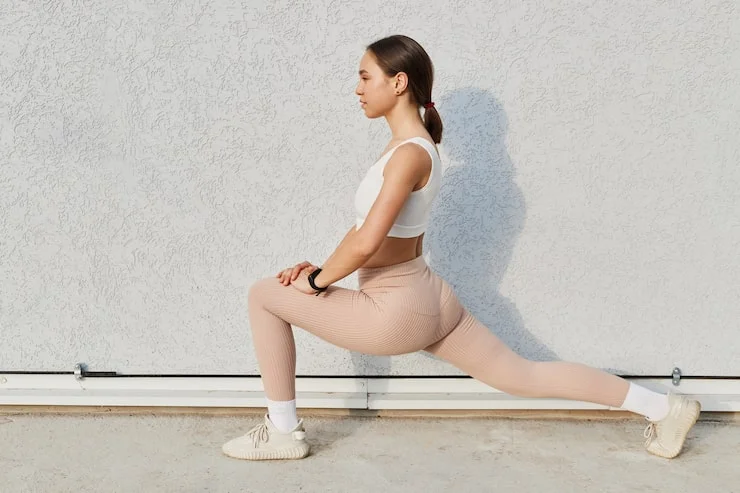
2. Low Lunge: Open the Hip Flexors
Step your right foot forward between your hands. Lower your left knee to the floor and slide it back until you feel a stretch at the front of your left hip and thigh. Keep your torso upright and your front knee stacked over your ankle. Stay here for five slow breaths, then switch sides.
Your hip flexors are the muscles at the front of your hip that shorten every time you sit. Short hip flexors pull on your lower back and make it ache. This lunge lengthens them directly. If the stretch feels too intense, put a folded towel under your back knee or keep your torso slightly forward.
3. Standing Forward Fold: Hamstrings Without the Gym
Stand with your feet hip-width apart. Bend your knees generously and fold forward from your hips. Let your head hang. Hold your elbows with opposite hands and let gravity do the work. Stay for eight breaths.
Most hamstring stretches ask you to sit or lie down. This one uses gravity and keeps your spine free. The bent knees are not cheating. Tight hamstrings often come with a tight lower back, and bending the knees lets your back release first. As your hamstrings loosen over weeks, you can straighten your legs more.
4. Figure Four: Hips and Glutes
Lie on your back with both knees bent and feet on the floor. Cross your right ankle over your left knee. Reach through and clasp your hands behind your left thigh. Gently pull your left thigh toward your chest until you feel a stretch in your right hip and glute. Hold for eight breaths, then switch.
This one targets the piriformis and the deep muscles around your hip joint. Men who run, lift, or sit all day tend to have tight glutes that pull on the lower back. Figure four is one of the safest ways to reach those muscles because you control the pressure with your own hands.
5. Thread the Needle: Upper Back and Shoulders
From hands and knees, slide your right arm under your left arm with your palm facing up. Let your right shoulder and the side of your head rest on the floor. Your left hand can stay planted for support or reach forward. Breathe into the space between your shoulder blades for six breaths. Switch sides.
This stretch reaches the rhomboids and the muscles between your shoulder blades, which get tight from pulling your shoulders forward at a desk. It also gently rotates your thoracic spine, the part of your back that often goes stiff because we rarely twist it during daily life.
6. Doorway Chest Stretch: Undo the Desk Slump
Stand in a doorway and place your forearms on the frame with your elbows at shoulder height. Step one foot forward until you feel a stretch across your chest and the front of your shoulders. Keep your ribs down and do not let your lower back arch. Hold for six breaths.
Rounded shoulders are almost universal among men who work on computers. The muscles in front of your chest shorten and pull your shoulders forward. This stretch opens that front line. The cue about your ribs matters. If you arch your back to get a bigger stretch, you are cheating the chest and loading your lower back instead.
7. Legs Up the Wall: Reset the Lower Back
Sit sideways next to a wall, then swing your legs up as you lie back. Your heels rest on the wall and your body makes an L shape. Let your arms rest at your sides. Stay for ten slow breaths.
This pose is not a deep stretch. It is a release. Gravity drains tension from your legs and lets your lower back settle into the floor without any effort. It is the best way to end a stretch session because it tells your nervous system that the work is done. If your hamstrings feel tight here, slide your hips a few inches away from the wall.
How to Build This Into Your Week?
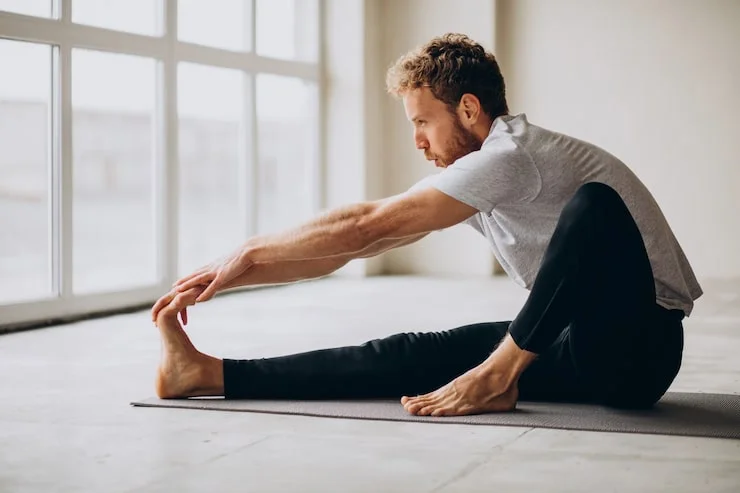
Three sessions a week is enough to see change. If you can do more, great, but consistency beats intensity. A fifteen-minute session on Monday, Wednesday, and Friday will do more for your hips and hamstrings than a ninety-minute class once a month.
Do the stretches in the order above. Cat-cow warms you up. The lunges and folds work the big muscles. Thread the needle and the doorway stretch address the upper body. Legs up the wall brings you down. That sequence moves from movement to stillness, which is how a good stretch session should feel.
You will be sore in a dull, satisfying way for a day or two after the first few sessions. That is normal. Sharp pain is not. If a stretch reproduces a shooting sensation down your leg or into your arm, skip it and come back to it later or ask a physical therapist about it.
You May Also Like: How Yoga Improves Testosterone In Men
What You Should Notice After a Few Weeks?
The first change is usually not flexibility. It is how you feel when you stand up from a chair. The stiffness that used to greet you after a long sit starts to fade. Your lower back complains less in the morning. Your shoulders sit back a little easier.
Real flexibility gains take longer. Give it four to six weeks of regular practice before you judge whether it is working. You are not chasing a split. You are chasing the ability to move through your day without your body fighting you. That is a goal worth fifteen minutes.
Frequently Asked Questions
Can I do these stretches if I have never done yoga?
Yes. Every stretch in this guide is beginner-level and uses plain positions. There are no balance poses and no chanting. If you can get on the floor and stand in a doorway, you can do this easy yoga stretches for men.
What if I cannot touch my toes?
You do not need to. The standing forward fold in this guide asks you to bend your knees. That is intentional. Toe-touching is not a measure of fitness and it is not the goal here. The goal is a gentle pull in the back of your legs, and bent knees get you there safely.
Should I stretch before or after a workout?
After is better for these longer holds. Save the deep stretching for when your muscles are warm. Before a workout, cat-cow and a few gentle lunges are fine to wake up your joints, but do not push for maximum range when your body is cold.
How long until I see results?
Most men notice less stiffness within two weeks of doing this three times a week. Visible changes in range of motion take four to six weeks. The key is not how hard you stretch. It is how often you show up and hold still.