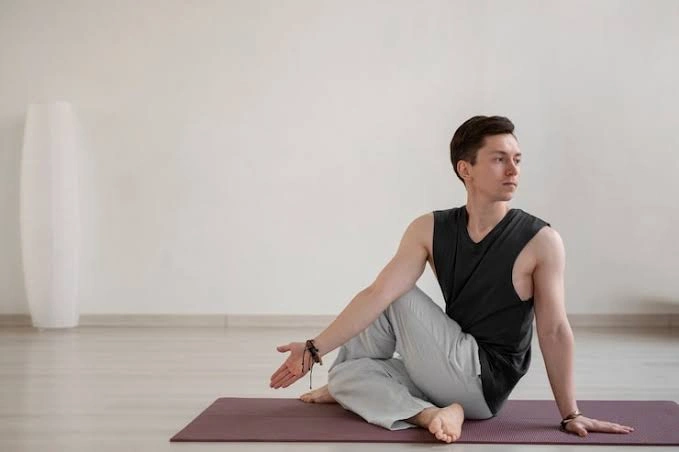
Yoga Stretches For Men
Most men don't need more flexibility for the sake of touching their toes. They need to move without their back seizing up. They need to reach overhead without their shoulders grinding. They need to sit at a desk all day and still stand up straight.
Yoga stretches for men work because they target the specific areas where men carry tension—hips, hamstrings, lower back, and shoulders. These aren't complicated poses. They're practical movements that undo the damage of sitting, training, and years of ignoring your mobility until something hurts.
This guide covers what actually matters: the poses that help, why they help, and how to make them part of your routine without turning your life upside down.
Why Men Need Yoga Stretches (And Why Most Avoid Them)?
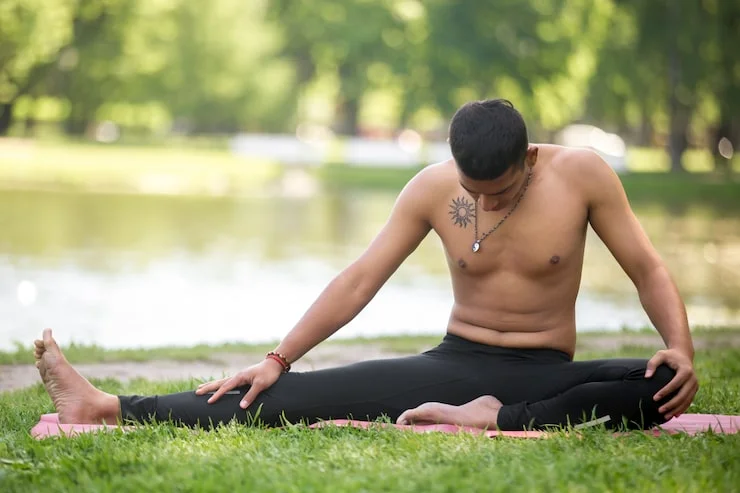
Men lose flexibility faster than women do. Part of it is anatomy. Part of it is behavior. Men tend to skip stretching in favor of lifting, running, or simply doing nothing. The result shows up around age 35 to 40—suddenly bending over to tie your shoes feels like a project.
The bigger issue is what happens to your body when you sit for hours. Your hip flexors shorten. Your hamstrings tighten. Your lower back takes the strain. Your shoulders round forward. This pattern feeds on itself. Tight hips pull on your lower back. Tight hamstrings tilt your pelvis. Rounded shoulders make your neck ache.
Yoga stretches break that cycle. They don't require a studio, a mat, or any spiritual interest. Twenty minutes a few times a week is enough to notice a difference. Some men feel relief after a single session.
Read Also: Yoga For Men Over 40 Beginners
The 8 Best Yoga Stretches for Men
These poses cover the areas where men hold the most tension. Each description explains what the stretch does and how to do it without hurting yourself.
1. Cat-Cow: Spinal Mobility
Cat-cow moves your spine through its full range of motion. It offsets the stiffness that builds from sitting in a chair all day. The movement also connects your breath to your body, which makes it a good warm-up.
Start on your hands and knees. Hands under shoulders. Knees under hips.
Inhale as you drop your belly toward the floor and lift your chest. Look slightly up. This is cow.
Exhale as you round your spine toward the ceiling. Tuck your chin toward your chest. Pull your belly button in. This is cat.
Move slowly between the two positions. Ten rounds is enough to feel your back loosen up.
2. Low Lunge: Hip Flexor Relief
Your hip flexors connect your lower spine to your thighs. Sitting shortens them. Short hip flexors pull your pelvis forward and strain your lower back. The low lunge stretches them out.
Step one foot forward into a lunge. Lower your back knee to the floor. Keep your front knee stacked over your ankle.
Lengthen your spine. Shift your hips forward gently until you feel a stretch in the front of your back hip. Keep your chest tall and your core engaged.
Hold for five to ten breaths. Switch sides.
If your back knee hurts on the floor, put a folded towel or blanket under it.
3. Supported Bridge: Lower Back and Posture Reset
Supported bridge counteracts the effects of sitting. It strengthens your posterior chain, lengthens your spine, and opens your chest. Many men feel lighter and more aligned after holding it for just a minute.
Lie on your back. Bend your knees. Feet flat on the floor, hip-width apart.
Lift your hips. Slide a yoga block, rolled towel, or firm pillow under your lower back and pelvis. Rest your weight on the support. Let your hips relax completely.
Keep your feet grounded. Breathe slowly. Stay here for one to three minutes.
4. Downward Dog Against a Wall: Hamstrings and Shoulders
Traditional downward dog is tough if your hamstrings are tight. Using a wall makes it accessible while still stretching your hamstrings and shoulders.
Stand facing a wall. Place your hands on the wall at shoulder height, slightly wider than your shoulders.
Walk your feet back. Hinge at your hips until your arms and torso form a straight line. Your back should be flat. Press your hands into the wall. Draw your hips back to deepen the stretch.
Hold for five to ten breaths.
5. Legs Up the Wall: Recovery and Circulation
This pose looks passive. It isn't. Legs up the wall relaxes your nervous system and increases blood flow to your lower body. It's useful after a workout or at the end of a long day.
Sit sideways next to a wall. Swing your legs up as you lower your back to the floor. Scoot your hips as close to the wall as comfortable. Your legs rest vertically against it.
Let your arms rest by your sides. Close your eyes if you want. Breathe slowly. Stay here for three to five minutes.
6. Runner's Lunge: Hips, Back, and Legs
Runner's lunge is a warm-up that doubles as a stretch. It energizes your hips, back, and legs before activity. It's also a good way to check in with your hip mobility.
Step into a lunge. Place your hands on the floor on either side of your front foot. Keep a straight line from your back heel to the crown of your head. Press your back thigh upward.
Hold for ten breaths. Switch sides.
Engage your abs to protect your lower back.
7. Triangle: Hamstrings and Hips
Triangle opens your hamstrings and hips in a way that feels challenging but controlled. Athletes tend to like it because it mimics the hip position used in many sports.
Take a wide stance. Turn your left toes toward the front of your space. Turn your right toes in slightly. Shift your hips back.
Lower your torso over your front leg. Place your left hand on your shin, a block, or the floor behind your left foot. Reach your right arm straight up. Open your chest. Look up at your right hand if your neck allows.
Hold for five to ten breaths. Switch sides.
Keep both quads engaged throughout.
8. Cow Face: Deep Hip Opener
Cow face stretches your hips and low back. It's slightly less intense than some deep hip openers, which makes it a good starting point if your hips are stubborn.
Start on your hands and knees. Cross your legs so one knee sits just behind the other. Your feet go out to the sides.
Shift your feet forward as you sit back onto your butt. Keep your knees stacked. Bring your hands forward. Breathe into your hips for ten breaths. Switch sides.
You May Also Like: Yoga Poses for Male Beginners
How to Build a Routine That Sticks?
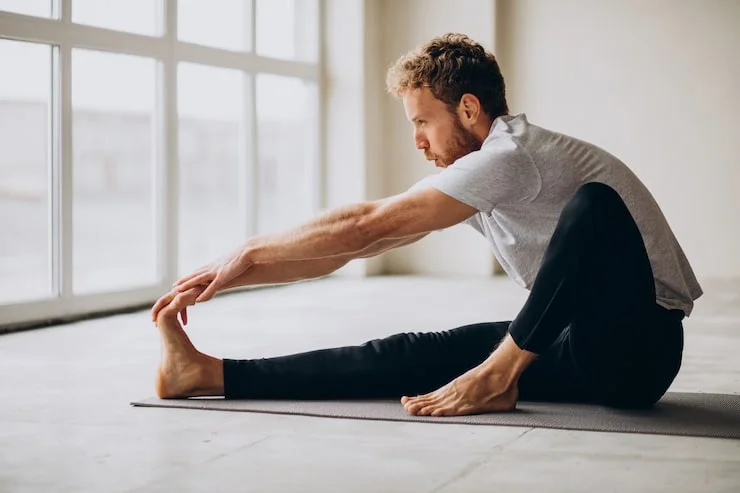
The best routine is the one you actually do. Five minutes of stretching most days beats a sixty-minute session once a month.
Start with three poses. Cat-cow for your spine. Low lunge for your hips. Supported bridge for your back. That's a complete mini-session in under ten minutes.
Attach it to something you already do. Stretch after your workout. Or before your morning shower. Or during the last few minutes of your lunch break. Linking a new habit to an existing one makes it automatic faster.
Don't force anything. Stretching should feel like tension, not pain. If a pose hurts in a sharp or pinching way, back off. Your body will tell you when it's ready to go deeper.
Breathe through it. Holding your breath tightens your muscles. Slow, steady breathing helps them release. If you're counting breaths, aim for five to ten per pose.
Common Mistakes Men Make with Yoga Stretches
- Going too hard. Flexibility takes time. Pushing into a stretch until it hurts can cause injury and set you back.
- Holding your breath. Tension in your breath creates tension in your muscles. Keep breathing.
- Skipping warm-up. Stretching cold muscles is less effective and more risky. A few minutes of light movement first makes a difference.
- Only stretching one side. Your body doesn't appreciate being lopsided. Match the time you spend on each side.
- Expecting overnight results. You'll feel better after one session. You'll see lasting change after a few weeks of consistency.
FAQs
How often should men do yoga stretches?
Three to four times a week is enough to see progress. Daily is fine if the stretches are gentle. Consistency matters more than duration.
What if I can't touch my toes?
You don't need to. Many effective yoga stretches don't require touching your toes. Focus on the quality of the stretch, not the depth.
Can yoga stretches help with lower back pain?
Yes, when done appropriately. Tight hips and hamstrings often contribute to lower back pain. Stretching those areas can reduce strain. If you have a diagnosed back condition, check with a doctor first.
How long should I hold each stretch?
Five to ten breaths, or roughly thirty to sixty seconds. Longer holds work for some people, but start shorter and build up.
Do I need a yoga mat?
No. A towel on a carpeted floor works fine for most of these poses. A mat helps with grip and comfort, but it's not required to start.