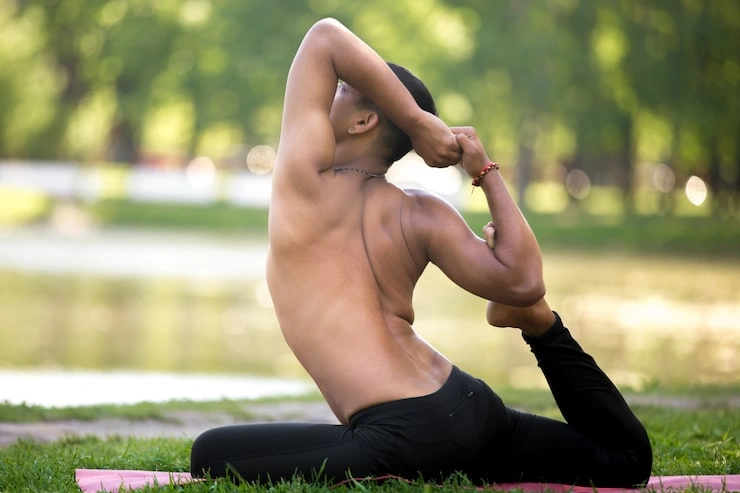
Yoga Routine For Men With Stiff Body
I hear this all the time from men. They tell me they cannot do yoga because they are too stiff. They say they would look stupid trying to bend over. They say yoga is for flexible people, not for guys who spend all day at a desk or in a truck or on a construction site.
Here is what I tell them. Yoga was literally invented for stiff people. The whole practice came from people sitting in meditation for hours. Their bodies got tight and locked up. They needed something to undo all that sitting. So yoga was born.
If you are already flexible, you do not need yoga as much. You are not the target audience. The stiff guy is. That is you. That is me. That is most men over thirty. Let me tell you about Mark. Mark is a plumber. He is fifty-two years old. His back hurts every morning when he gets out of bed. His shoulders are rounded forward from years of reaching into tight spaces under sinks. He tried yoga once and could not get his hands past his knees in a forward fold. He walked out and never came back.
Mark made a mistake. He thought yoga was about touching his toes. It is not. Yoga is about moving your spine through its full range of motion. It is about opening your hips so your lower back stops hurting. It is about getting your shoulders back where they belong instead of hunched forward. Mark does not touch his toes yet. But his back pain is gone. He does not dread getting out of bed anymore. That is what yoga routine for men with stiff body.
Where Men Get Tight And Why?
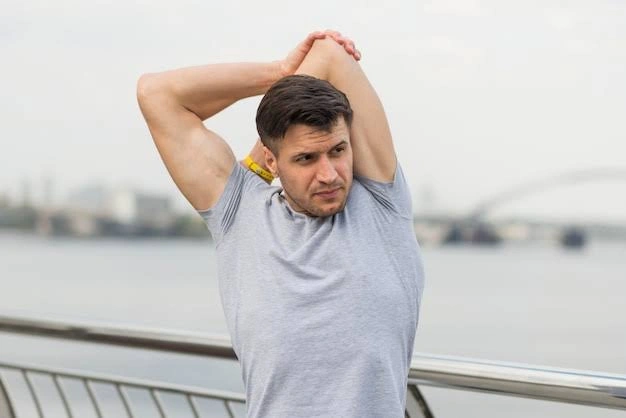
Your body develops tight spots based on what you do all day. If you sit at a computer, your hip flexors shorten. Your chest caves in. Your neck cranks forward. If you drive for a living, your hamstrings get short from pressing pedals. Your lower back gets compressed from sitting on a seat all day.
If you lift weights, you probably train your chest and arms more than your back. That pulls your shoulders forward even more. If you run, your hamstrings tighten up. Your calves get knotted. Your hips get locked from the repetitive motion.
Now add stress to that picture. When men are stressed, they hold tension in their shoulders and jaw. They clench. They brace. That tension stays there long after the stressful moment passes. It becomes chronic tightness.
So you have physical tightness from your daily activities and emotional tightness from your daily stress. Together they make you feel old and locked up. You are not old. You are just tight.
The good news is tightness responds to movement. The bad news is most men move in the same limited ways every day. You walk forward. You sit. You stand. You reach forward. You never move sideways. You never twist. You never extend backward. Your body forgets those movements.
This routine gives your body back those forgotten movements.
Read Also: Yoga For Men Over 40 Beginners
The Routine
You need about twenty-five minutes for this. That is it. Not two hours. Not ninety minutes. Twenty-five minutes. Three times a week. That is less time than most men spend scrolling on their phones before bed.
Find a floor. Carpet works. A mat works. A towel on a hard floor works. You do not need fancy equipment. You do not need special clothes. Just wear something that lets you move.
Do this routine on Monday, Wednesday, and Friday. Or Tuesday, Thursday, and Saturday. Whatever fits your schedule. But do it three times every week. That consistency is what changes your body.
Start With Your Spine
Get on your hands and knees. Your hands go right under your shoulders. Your knees go right under your hips. Look at the floor.
Now breathe in and let your belly drop down. Your back arches. Your chest lifts. Your tailbone points up. This is the cow part.
Now breathe out and round your back up. Your chin tucks in. Your belly pulls up toward your spine. This is the cat part.
Move between these two positions slowly. Let your breath lead. Inhale into cow. Exhale into cat. Do this about ten times.
Most men rush this part. They want to get to the stretching. Do not rush this. Your spine has been compressed all day. These movements pump fluid into the discs between your vertebrae. That fluid is what keeps your back healthy. Without it, your discs dry out and you get back pain.
Also, this movement wakes up muscles you did not know you had. Small muscles along your spine. Deep stabilizers. They have been asleep from sitting. This wakes them up.
The Upside Down V
From that hands and knees position, tuck your toes and push your hips up toward the ceiling. Your body makes a V shape. Your hands stay flat. Your feet stay hip width apart.
Here is the thing. Your knees can bend. Bend them as much as you need to. The goal here is not straight legs. The goal is a straight spine. If your hamstrings are tight, your legs will not straighten. That is okay. Bend your knees until your back is flat.
Now pedal your feet. Press one heel down. Then the other. Keep a bend in your knees while you do this. This pedaling action stretches your calves and the back of your thighs. It also works on your Achilles tendons, which get tight from wearing shoes with heels.
Stay in this position for eight breaths. Let your head hang down. Do not hold tension in your neck. Let gravity pull your head toward the floor.
This pose is gold for men with tight bodies. It stretches your entire back side. Hamstrings, calves, back muscles, shoulders. All of it. It also builds strength in your arms and shoulders because you are holding your body weight.
Step Into A Lunge
From that V shape, step your right foot forward between your hands. Your right knee should be right above your right ankle. Not in front of it. Not behind it. Right above it.
Lower your left knee to the floor. Now you are in a lunge position. Your left leg stretches out behind you.
Here is the part men miss. Squeeze your left glute. Push down through your right foot. Engage your legs. Do not just hang out in the pose. Actively push your hips forward and down.
You will feel a stretch through the front of your left hip. That is your hip flexor. That muscle gets short from sitting. Stretching it is one of the best things you can do for your lower back. When your hip flexors are tight, they pull on your pelvis. That pull tilts your pelvis forward. That tilt compresses your lower spine.
Stretch that hip flexor and your back feels better instantly.
Raise your arms overhead if you feel stable. If you feel wobbly, keep your hands on your front thigh. Hold for eight breaths. Then switch sides.
Straighten That Front Leg
From the lunge, straighten your front leg. Keep your back knee on the floor. Your front heel stays down. You will feel this in your hamstring.
But pay attention. Keep a slight bend in that front knee. Do not lock it straight. A locked knee puts the stretch into your lower back. A slightly bent knee puts the stretch into your hamstring muscle where it belongs.
Now point your chest toward your front foot. Not your nose. Your chest. When you point your nose, your back rounds. When you point your chest, your spine stays long. A long spine is what you want.
This pose is where most men go wrong. They push too hard. They try to touch their forehead to their knee. That is not the point. The point is a long spine and a stretch in the back of your thigh.
Hold for eight breaths. Switch sides.
The Hip Opener
This pose is the one that changes everything for men. It opens your outer hips. Your glutes. The muscles around your tailbone.
Get back on all fours. Bring your right knee forward and place it behind your right wrist. Your right shin angles across your mat toward your left hip. Your back leg extends straight behind you.
Now lower your hips toward the floor. Your hips will not touch. That is fine. Put a folded blanket or a cushion under your right hip if you need support. Do not force your hips down.
Walk your hands forward and fold your upper body down over your front leg. Rest your forehead on your hands or on the floor. Breathe slowly.
Stay here for one to two minutes. This is the longest hold in the routine. The hip capsule takes time to open. You cannot rush it. You have to give it time.
This pose stretches your piriformis muscle. That muscle runs through your glute and attaches to your tailbone. When it gets tight, it can pinch your sciatic nerve. That pinch causes pain that runs down your leg. Stretch this muscle and that pain goes away.
Switch sides when you are done. Hold for the same amount of yoga routine for men with stiff body.
You May Also Like: How Yoga Improves Testosterone In Men
Open Your Shoulders
Get back on all fours. Reach your right arm under your body and slide it across the floor toward your left hand. Keep your left hand planted on the floor. Lower your right shoulder and the right side of your head to the floor.
You will feel a stretch in your upper back and the back of your shoulder. This area gets locked up from bench pressing, from driving, from working at a desk. Men rarely stretch this area. They stretch their chest but they ignore their back.
This stretch releases tension that builds up in your neck and shoulders. It can even help with tension headaches.
Hold for eight breaths. Slide your arm back out. Switch sides.
Core Work
Sit on the floor with your knees bent. Your feet stay flat on the floor. Lean back slightly. Keep your spine long. Do not round your back.
Lift your feet off the floor. Your shins stay parallel to the floor. Your body makes a V shape.
Now pull your belly button toward your spine. Engage your deep core muscles. Not your superficial six-pack muscles. The deeper ones that wrap around your torso.
Hold this for five breaths. Lower your feet. Rest. Do it two more times.
This pose builds the core strength that protects your lower back. Men with weak cores get injured when they lift heavy objects. Men with strong cores stay safe.
The Rest Part
Lie on your back. Let your feet fall open to the sides. Let your arms rest alongside your body. Palms face up. Close your eyes.
Just lie there for three minutes. Breathe naturally. Let your body sink.
Men skip this. They think it is a waste of time. It is not. This is where your nervous system resets. This is where your muscles let go of residual tension. Without this rest, you carry that tension back into your day.
Three minutes is all it takes.
What To Expect In Your First Month?
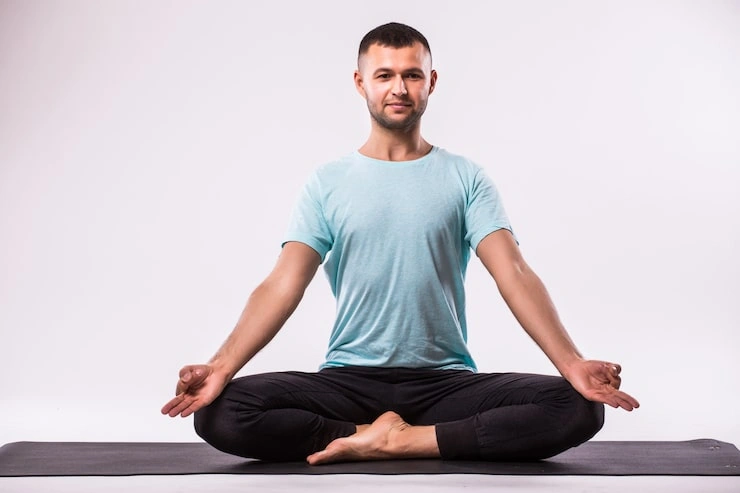
Your first week will feel strange. You will feel tight after the routine. That is because your muscles are not used to moving this way. They are waking up. The soreness goes away as you keep going.
By the second week, you will notice you can bend a little deeper. Not much. A little. You will notice your back feels better when you wake up. By the third week, the routine starts to feel familiar. You do not have to think about each pose as much. Your body knows what comes next. By the fourth week, you will move differently in your daily life. You will bend down to pick something up and notice the motion feels easier. You will turn your head to look behind you and notice your neck does not hurt. You will get out of the car and not need to grab the door for support.
That is the real progress. Not touching your toes. Moving through your day with less pain and more freedom.
A Note On Breathing
Your breath tells your body whether you are safe or not. When you breathe slow and steady, your body relaxes. When you breathe fast or hold your breath, your body tenses.
In every pose, keep your breath even. Breathe in through your nose. Breathe out through your nose. Count to four on the inhale. Count to four on the exhale.
If your breath gets ragged, you are pushing too hard. Back off. Find a place where you can breathe comfortably. That is your edge. Stay there.
The Most Common Mistake
Men push too hard. They think more pain means more gain. That is not how stretching works. When you push into pain, your muscles contract to protect themselves. They fight the stretch. You get nothing.
Find the place where you feel the stretch but you can still breathe easily. Stay there. Let time do the work. Over seconds and minutes, your muscle fibers relax and lengthen. You do not have to force them. You just have to give them time.
Final Thoughts
Your body is not broken. It is just tight. Tightness comes from how you live. Movement undoes that tightness. You do not need to become a flexible person. You just need to move your body through its full range of motion a few times a week. That is enough. That is all it takes to feel better. Start today. Do the routine. Come back to it on your next scheduled day. By the time a month passes, you will feel the difference.