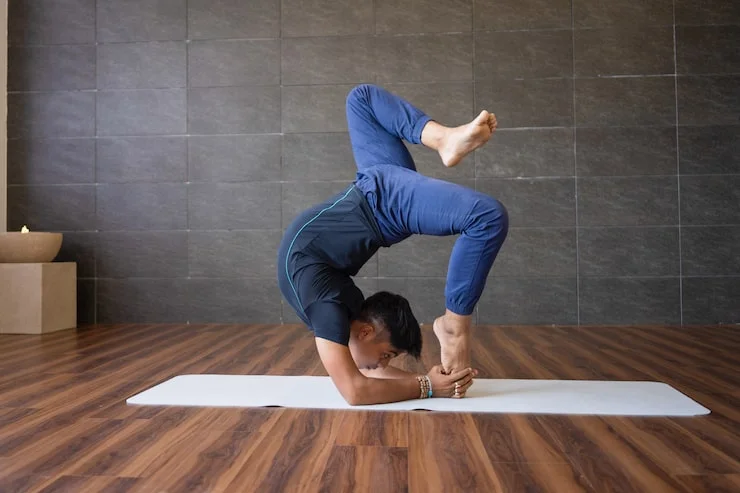
Yoga For Beginners Over 50 For Weight Loss
Starting yoga after fifty to lose weight is not about twisting your body into a pretzel. It is about giving your body what it needs to move better, feel stronger, and burn calories without pounding your joints. If you have been looking for a way to lose weight that respects your knees, your back, and your schedule, yoga might be exactly what you need. This guide walks you through everything you need to know to begin, from why it works to the exact poses you can do yoga for beginners over 50 for weight loss.
Why Yoga Works for Weight Loss After 50?
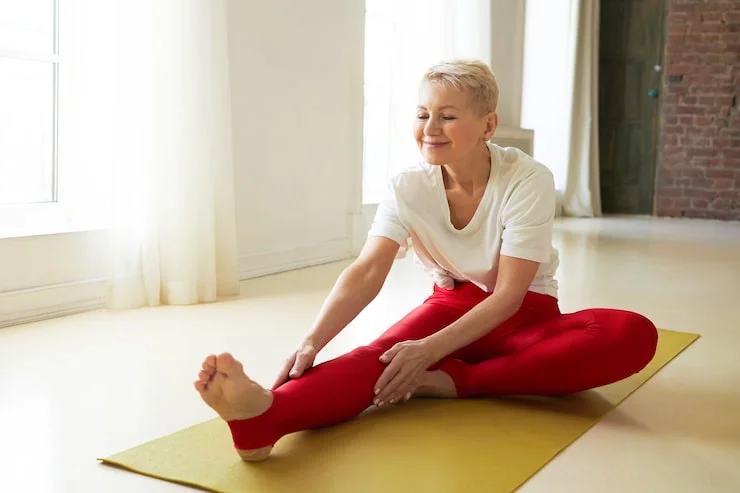
You might wonder how something that looks like stretching can help you lose weight. The answer is simpler than you think. Yoga burns calories, builds muscle, and lowers the stress hormones that tell your body to hold onto fat.
A study on women aged twenty to sixty-five found that six months of regular yoga practice led to a body fat reduction of over six percent . The women in their fifties saw consistent results alongside the younger participants. This matters because it proves that your age does not stop your body from responding to movement. The study used a heated style of yoga, but the core message applies to any consistent practice: showing up and moving your body changes your body composition over time.
The American Heart Association points out that yoga also helps with weight by improving stress levels . When you are stressed, your body produces more cortisol, a hormone that encourages fat storage, especially around your belly. Yoga breathing and gentle movement calm your nervous system. You become less likely to reach for comfort food when you are anxious, and your body stops holding onto extra weight as fiercely.
There is another piece that often gets overlooked. Yoga builds muscle. Muscle burns more calories at rest than fat does. When you practice poses that ask your legs, core, and arms to hold your body weight, you are strengthening your muscles in a low-impact way. This means your body becomes a slightly better calorie-burning machine even when you are sitting still.
Read: Simple Yoga Tips For Beginners
Safety First: What You Need to Know Before Your First Pose
Before you roll out a mat, take a moment to think about your body. You do not need to be flexible or fit to start yoga, but you do need to be smart about how you begin.
The first step is to talk to your doctor if you have any existing health conditions, especially heart disease or high blood pressure. The American Heart Association notes that people with heart conditions may need to avoid poses that place the head below the heart . This is a simple modification, but it is an important one to know before you start.
The second step is to accept that props are your friends, not signs of weakness. A study on yoga for older adults found that using supportive props and adapting poses to individual needs is a key strategy for safe practice . A chair, a wall, or a block is not cheating. These tools allow you to do the pose in a way that protects your joints and helps you build strength gradually. If a pose feels sharp or painful in a joint, stop. Yoga should feel like work in your muscles, never like pain in your bones.
Finally, let go of the idea that you need to keep up with anyone. The people you see on social media doing advanced poses have been practicing for years. Your only job is to show up and do what your body can do today. That is how progress happens.
The Core Poses for Beginners Over 50
These five poses form a complete beginner practice. They work your entire body, and every single one can be modified with a chair or a wall. Do them slowly and breathe through each one.
Chair Pose (Utkatasana) with Wall Support
Stand with your back against a wall and your feet hip-width apart. Slowly slide your back down the wall as if you are sitting in an invisible chair. Stop when your thighs are as close to parallel to the floor as feels comfortable. Hold this for three to five breaths. You will feel your thighs and core working. If your knees bother you, do not slide down as far. This pose strengthens the muscles you use to stand up from a chair, which is a real-life benefit you will notice within weeks.
Cat-Cow on Hands and Knees
Come onto your hands and knees on a carpeted floor or a mat. Place your hands under your shoulders and your knees under your hips. As you breathe in, let your belly drop toward the floor and lift your chest and tailbone. As you breathe out, round your back toward the ceiling and tuck your chin. Move slowly and repeat this ten times. This gentle movement warms up your spine and relieves stiffness in your back. If your wrists hurt, make fists and rest on your knuckles, or do the same movement seated in a chair.
Tree Pose with Wall Support
Stand next to a wall and place one hand on it for balance. Shift your weight onto one foot. Pick up your other foot and place it on your ankle, your calf, or your inner thigh, wherever it feels stable. Do not place your foot on your knee joint. Stand tall and breathe for three to five breaths, then switch sides. This pose builds balance and strengthens the standing leg. Balance work becomes more important as you age, and this is a safe way to practice it.
Seated Forward Fold
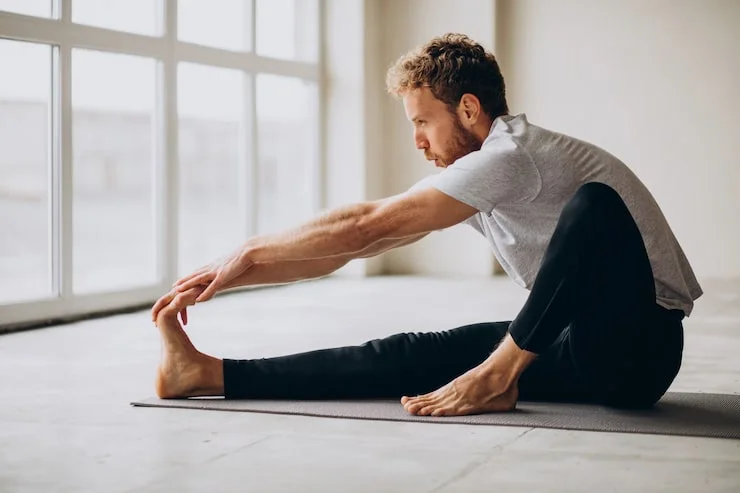
Sit on the edge of a sturdy chair with your feet flat on the floor. Straighten one leg in front of you with your heel on the floor and your toes pointing up. Hinge forward from your hips, keeping your back as straight as you can, and reach your hands toward your shin or thigh. Stop wherever you feel a gentle stretch in the back of your leg. Hold for three breaths and switch sides. This stretches your hamstrings and lower back without requiring you to get down on the floor.
Standing Side Stretch
Stand with your feet hip-width apart. Reach your right arm overhead and lean gently to the left, feeling a stretch along the right side of your body. Keep your hips steady and do not collapse forward or backward. Hold for three breaths, then switch sides. This releases tension in your side body and shoulders, areas where many people carry stress without realizing it.
A Simple 15-Minute Routine You Can Do Today
You do not need an hour. You need consistency. This short routine fits into your morning before breakfast or your evening before dinner.
Start with one minute of calm breathing. Sit in a chair with your feet flat and your hands on your thighs. Breathe in through your nose for a count of four. Breathe out through your nose for a count of four. Do this for one minute to settle your mind.
Move into Cat-Cow for two minutes. Go slowly and let your breath guide the movement. Then do Chair Pose against the wall for one minute, holding for three breaths at a time and resting between holds. Move to Tree Pose with wall support for two minutes, one minute on each side. Do the Seated Forward Fold for two minutes, one minute per leg. Finish with the Standing Side Stretch for two minutes, one minute per side.
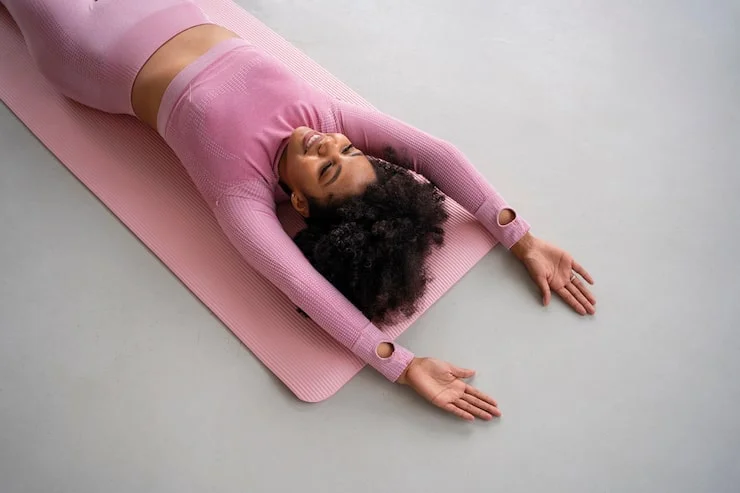
That is ten minutes of movement. Spend the last five minutes lying on your back with your knees bent and your feet flat on the floor, or sitting comfortably in a chair. Close your eyes and breathe naturally. This quiet time is not wasted. It is when your body shifts from the stress response into recovery mode, and it is part of how yoga helps with weight loss.
You May Also Like: Yoga Workout for Beginners: A Complete Guide to Get You Started
Making It Work: Consistency Over Intensity
The biggest mistake beginners make is doing too much too soon and then quitting because of soreness or burnout. A woman in her fifties in China who weighed over one hundred twenty kilograms began practicing yoga at home. She lost seven and a half kilograms over the course of a year and found that her knee pain from arthritis improved significantly . She did not do an extreme program. She practiced regularly and let time do its yoga for beginners over 50 for weight loss.
Your goal for the first month is not weight loss on the scale. Your goal is to show up three to four times per week. Ten to fifteen minutes is enough. As your body adapts, you can add a few minutes or repeat the routine twice. The weight loss will follow because you are moving more, building muscle, and lowering stress. But it follows consistency, not intensity.
Pay attention to how your clothes fit and how you feel climbing stairs. These are better measures of progress in the early weeks than the number on the scale. Muscle weighs more than fat, and as you build strength, the scale might not move as fast as your waistband does.
Frequently Asked Questions
Do I need to be flexible to start yoga?
No. Flexibility is a result of yoga, not a requirement for it. You start where you are and use props to make poses accessible. Over time, your flexibility improves naturally.
How long before I see weight loss?
Most people notice changes in how their clothes fit and how they feel within three to four weeks of consistent practice. Visible weight loss on the scale typically shows up after six to eight weeks. The key is regular practice, not perfect practice.
Is hot yoga safe for beginners over 50?
The American Heart Association suggests that older adults and beginners look for gentle, restorative, or chair-based classes . Hot yoga places extra stress on the heart and can lead to dehydration. For your first few months, stick to a normal room temperature and a gentle style.
What if I have knee or hip pain?
Chair-based yoga is a proven option. A large trial on older adults with multiple health conditions used chair-based yoga successfully . You can do almost every pose seated or with the support of a chair. If a pose causes sharp pain, stop and modify or skip it.
Can yoga alone help me lose weight?
Yoga helps, but it works best alongside basic nutrition. You do not need a strict diet. Focus on eating regular meals with vegetables, protein, and whole grains. Yoga can help with weight loss, but combining it with sensible eating makes the process faster and more sustainable.